The baby book covers the first year beautifully: first smile, first word, first step. But what about the first day of kindergarten, the first goal scored, the first time they read a book by themselves, the first heartbreak? Childhood is a continuous stream of milestones, and most of them happen after the baby book is closed and gathering dust on a shelf. The parents who capture the full journey do not do it through one method — they build a system that is easy enough to maintain for 18 years.
The Monthly and Yearly Photo
The simplest system with the biggest payoff:
- Same spot, same pose, every month or year — Stand your child in the same location (a doorframe, next to a tree, on a specific chair) and take a photo at a regular interval. The progression over years is staggering.
- First day of school, every year — The classic photo with a sign showing the grade, age, and what they want to be when they grow up. The answers change every year and the photos become a treasured series.
- Holding the same stuffed animal — A newborn photo with a large stuffed animal, repeated every birthday, shows physical growth in the most visual way possible.
Our keepsake storytelling guide covers more creative approaches to documenting your child's identity at each stage.
Video Interviews
A short video interview captures what photos cannot — their voice, their expressions, and their evolving personality:
- Ask the same questions every birthday — "What is your favorite food? Who is your best friend? What do you want to be when you grow up? What makes you happy?" The answers at age 4 versus age 14 are a masterpiece of contrast.
- Record reactions to milestones — The moment they realize they lost a tooth, the seconds after opening a birthday gift, the reaction to learning they made the team. These candid clips are more valuable than any posed photo.
- Let them interview you — Turn the camera around and let your child ask you questions. Their curiosity about you at different ages is delightful and revealing.
Written Documentation
Words capture context that images miss:
- A one-line-a-day journal — Write one sentence about your child every day. It takes 30 seconds and after five years you have 1,825 snapshots of their life. Many journals are designed to show the same date across multiple years on one page.
- Letters on milestones — Write your child a letter on each milestone: first day of school, birthdays, moving to a new house, making a team, losing a grandparent. Seal them and give the collection on their 18th birthday. Our time capsule guide has more ideas for capturing childhood in a way your child can open later.
- A quote journal — Write down the funny, profound, and bizarre things your child says. Kids are accidentally poetic and unintentionally hilarious. These quotes become the family's greatest hits.
Creative Documentation
Beyond photos and words, there are creative ways to capture who your child is at each stage:
- Annual handprint or footprint — Paint or ink a handprint every birthday. Display them in a line or compile them into a book. The physical growth from year to year is tangible.
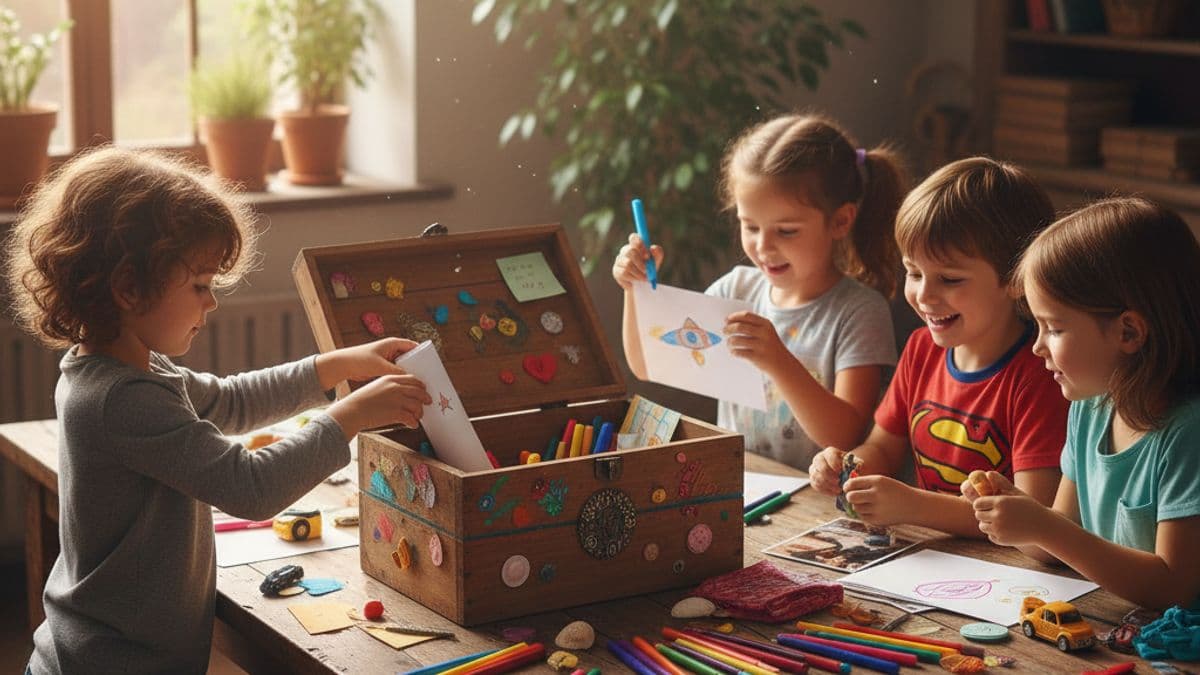
- Art portfolio — Save one or two pieces of your child's artwork per year. Date them and store them flat. By the time they are a teenager, you have a portfolio of their creative evolution.
- Height chart — A dedicated wall or board where you mark their height on each birthday with the date. If you move houses, take the board with you.
- A song for each chapter — Some families choose a "song of the year" that represents their child at each age, building a playlist that grows with them.
Digital Organization
The photos and videos are useless if you cannot find them ten years later:
- Cloud backup — Use Google Photos, iCloud, or another service that automatically backs up photos from your phone. Tag or album-organize by year.
- Annual photo book — At the end of each year, select the best 50 to 100 photos and create a printed photo book. It is easier to maintain one book per year than to try to create a massive retrospective later.
- Dedicated folder structure — Create folders by year and milestone. Move photos from your camera roll into organized storage monthly so you do not fall behind.
- Multiple backups — Cloud plus a physical hard drive. Photos are irreplaceable — redundancy is not paranoia, it is responsible parenting.
The Milestones You Might Miss
Not all milestones come with a ceremony. Watch for and document these quiet ones:
- The first time they made their own breakfast
- The first time they stood up for someone else
- The last time they asked you to carry them
- The first time they chose to read a book for fun
- The moment they figured out something hard and you could see the confidence click into place
These everyday milestones are the ones you will want to remember most.
Capture This Moment in Music
Photos show what your child looked like. Videos show what they sounded like. A personalized song captures what they felt like — the joy, the quirks, the magic of who they are right now. Commission one at key milestones (a birthday, a graduation, a transition) and build a musical timeline of their childhood.
Create a custom song for your child and add a layer to the milestone collection that no photo or journal entry can match.