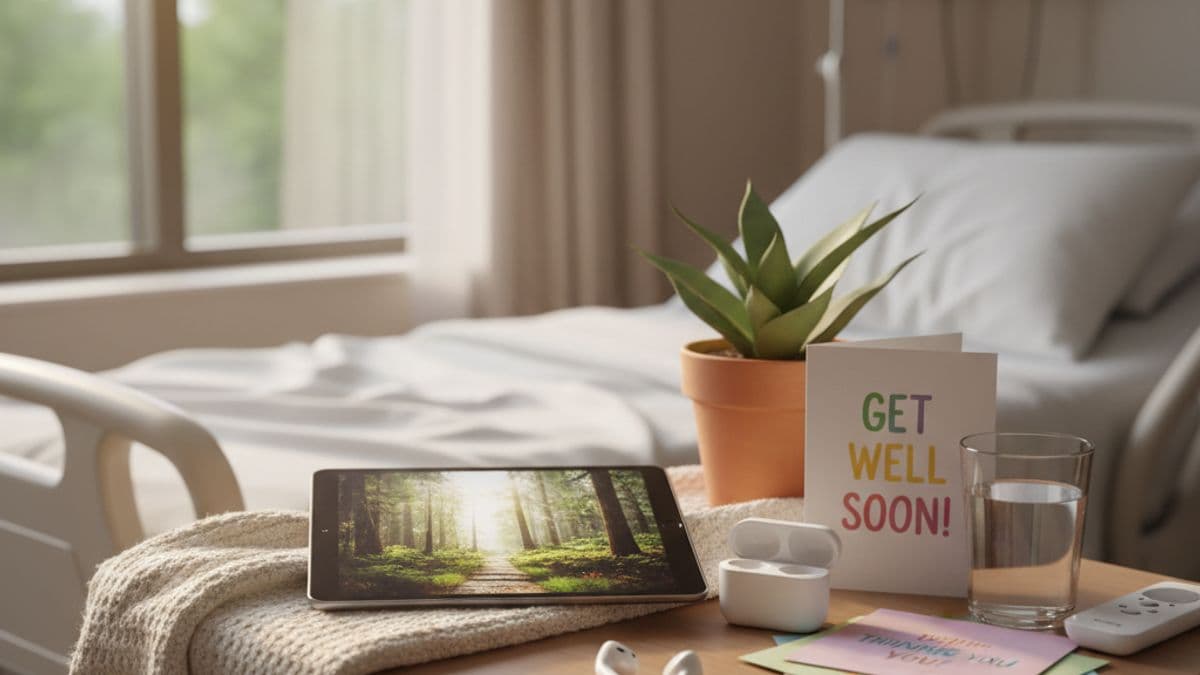
When everything feels like it's falling apart — illness, loss, heartbreak, burnout, uncertainty — the idea of self-care can sound almost insulting. Take a bubble bath? Meditate? You're barely holding it together. But real self-care during difficult times isn't about pampering. It's about survival. It's the small, deliberate acts that keep you functioning when your mind and body want to shut down. And those acts matter more than you think.
Redefining Self-Care When You're in Crisis
Social media has turned self-care into a product category — face masks, candles, spa days. And while those things can be pleasant, they miss the point entirely when you're in genuine distress. Real self-care during hard times looks more like this:
- Eating something, even when you have no appetite
- Drinking water because you haven't had any since morning
- Taking a shower when you've been in the same clothes for three days
- Stepping outside for five minutes of fresh air
- Saying no to one obligation so you can rest
These aren't glamorous. They're not Instagram-worthy. But they're the foundation that everything else is built on. When your emotional reserves are empty, keeping the basics intact is an achievement.
Protecting Your Sleep
Sleep is the first thing to go during difficult times and the most critical thing to protect. Anxiety disrupts it. Grief steals it. Pain fragments it. And without sleep, every other coping mechanism becomes harder to access.
You don't need to sleep perfectly. You just need to give yourself the best possible conditions:
- Keep a consistent bedtime — Even if you don't fall asleep right away, training your body to lie down at the same time helps over days and weeks
- Limit screens in the last hour — The blue light issue is real, but more importantly, the content you consume before bed shapes your mental state as you try to rest
- Use sound intentionally — White noise, nature sounds, or calming music can quiet a racing mind. Music designed for relaxation can be especially effective at signaling to your nervous system that it's safe to let go
- Don't fight insomnia with frustration — If you're lying awake after 20 minutes, get up, do something quiet and low-stimulation, and try again. Battling wakefulness only feeds the cycle
Moving Your Body, Even a Little
Exercise might be the last thing you want to do, and that's fair. No one's asking you to run a marathon during a crisis. But movement — any movement — changes your chemistry. A 10-minute walk. Gentle stretching. Dancing in your kitchen to a song you love. The goal isn't fitness. The goal is to shift the physical state your body is locked in.
Stress, grief, and anxiety live in the body as much as the mind. Tight shoulders, clenched jaw, shallow breathing, heavy limbs — these are physical manifestations of emotional pain. Movement interrupts the loop. It doesn't solve the problem, but it gives your nervous system a brief reset, and those resets add up.
Nourishment Over Nutrition
During hard times, eating "healthy" might not be realistic. And that's okay. The priority isn't a balanced diet — it's not running on empty. If all you can manage is toast and peanut butter, that counts. If someone brings you a casserole and you eat it out of the dish with a fork, that counts too.
Dehydration is sneaky and makes everything worse — fatigue, headaches, brain fog, irritability. Keep a water bottle nearby and sip throughout the day. If plain water feels unappealing, add lemon, drink herbal tea, or grab a sports drink. The delivery method doesn't matter as long as fluid goes in.
If you're supporting someone who's going through a hard time, bringing food is one of the most practical things you can do. Our guide on how to be there for someone has more ideas for showing up in meaningful ways.
Setting Boundaries Without Guilt
Difficult times often come with an avalanche of well-meaning people who want to help, check in, or offer advice. Their intentions are good, but the constant engagement can be draining when you're already running on fumes. Setting boundaries isn't selfish. It's necessary.
- It's okay to not answer every text right away
- It's okay to decline a visit even though someone drove across town
- It's okay to say, "I need a day without talking about it"
- It's okay to mute group chats, skip social events, and let calls go to voicemail
The people who truly care about you will understand. And the ones who don't understand probably aren't the ones you need around you right now.
Finding Comfort in Music and Creative Expression
There's a reason people turn to music when words fail. It reaches the emotional centers of the brain in ways that conversation can't. During difficult times, music can serve as a companion that doesn't ask anything of you. It meets you where you are — in sadness, in anger, in numbness — without judgment.
Creating a healing playlist tailored to your current emotional state can be a form of active self-care. Some people need songs that match their grief so they feel less alone in it. Others need songs that lift them up when they're ready to surface. Both approaches are valid, and the right playlist can become a tool you return to daily.
Writing, drawing, journaling — any creative outlet — can also process emotions that feel too big to hold internally. You don't need to be talented. You just need a way out for what's inside.
Knowing When to Ask for Help
Self-care has its limits. If you're unable to function — unable to eat, sleep, work, or care for dependents — for an extended period, professional support isn't a luxury. It's a critical next step. Therapy, counseling, or even a single session with a mental health professional can provide tools you don't have access to on your own.
There's no threshold of suffering that qualifies you for help. You don't have to hit rock bottom to deserve support. If you're struggling, that's enough. And if the cost is a barrier, many therapists offer sliding-scale fees, and community mental health centers provide low-cost options.
In the meantime, take the next small step. Drink the water. Take the walk. Play the song. And if you want something deeply personal to hold onto — a piece of music made just for your situation and your story — a custom healing song can turn what you're going through into something that helps you through.